20260731T173020260731T1900America/Argentina/Buenos_Aires11.19. Authoritarian Afterlives: uses and abuses of Memory in a Comparative Perspective [ES/EN]SV101MSA Buenos Aires 2026buenosairesconference@memorystudiesassociation.org
The Perverse Circle of Terruqueo: Defensive Responses and the Reproduction of Political Stigma in Contemporary Peru
Individual paperMemory Politics and Policies00:00 Midnight - 00:00 Midnight (America/Argentina/Buenos_Aires) 2026/07/31 03:00:00 UTC - 2026/07/31 03:00:00 UTC
Research Question How do defensive responses to terruqueo paradoxically contribute to reproducing the same political stigma they seek to refute? Methodology The study adopts a qualitative and discursive approach, based on Critical Discourse Analysis (CDA) and the examination of representative cases from the Peruvian public sphere between 2016 and 2024. It reviews media statements, social media interventions, opinion columns, and audiovisual materials linked to episodes of political stigmatization. The corpus is analyzed through categories such as “memory of the internal enemy,” “discourse of threat,” and “strategies of symbolic self-defense,” in order to identify the linguistic and emotional mechanisms that sustain the reproduction of stigma. Main Findings The findings show that defensive responses to terruqueo—whether expressed through denial, irony, or moral outrage—tend to reaffirm the semantic framework imposed by the accusatory discourse. By accepting the logic of suspicion, the victims of stigma inadvertently contribute to consolidating a symbolic boundary between what is “acceptable” and what is “subversive,” thereby reinforcing the culture of fear inherited from the internal armed conflict. The study concludes that terruqueo is not only a tactic of ideological delegitimization but also a mechanism of social control that regulates political expression and constrains the construction of democratic memories. It proposes understanding this phenomenon as a form of symbolic violence that persists within contemporary Peruvian public language.
The memory of a dictatorship in the streets of a democracy. Post-Franco Spain as a case study
Individual paperMemory Politics and Policies00:00 Midnight - 00:00 Midnight (America/Argentina/Buenos_Aires) 2026/07/31 03:00:00 UTC - 2026/07/31 03:00:00 UTC
The streets of our democracies are full of meaning. Their names are not a “natural” reflection of the passage of time, nor do they in themselves constitute any lesson or history book. Rather, they are manifestations of authority, lists of hegemonies that reflect the power relations at different historical moments, of powers that, moreover, are determined to remain in place. Franco's Spain was the second longest-lasting right-wing dictatorship in 20th-century Europe. From the outset, it sought to erase the presence and memory of the Second Republic's democracy from the public sphere and perpetuate its own dictatorial memory in its place, through, among other things, street names and countless signs and symbols. Fifty years after the dictator's death, any random stroll through a Spanish city still reveals his daily presence, which often goes unnoticed. My paper will address the different cycles of Francoist memory following the dictator's death, based on street names and symbols of the dictatorship. To this end, I will focus particularly on the case of Valencia, Spain's third most populous city. Based on street-naming studies, I will divide my presentation into four phases: the symbolic construction of the Franco dictatorship (1939-1970s), the first attempts at a democratic policy of memory (1979-1980s), the inaction of conservative governments and the emergence of democratic memory movements and associations (1990s-2015), and, finally, from a theoretical-practical approach, the new memory policies that began ten years ago, leading to the largest process of name changes in the almost fifty years of Spain's current democracy. In this regard, I will focus on the criteria in the two major phases of name changes (1979-1987 and 2015-2019), their actors and arguments, as well as the public debates and challenges they raised.
La memoria de una dictadura en las calles de una democracia. La España (post)franquista como caso de estudio.
Las calles de nuestras democracias están llenas de significado. Sus nombres no son el reflejo ‘natural’ del paso del tiempo, ni tampoco conforman de por sí ninguna lección o libro de historia. Más bien, son manifestaciones de autoridad, listados de hegemonías que reflejan las relaciones de poder en diferentes momentos históricos, de unos poderes -además- con voluntad de permanencia.
La España franquista fue la segunda dictadura de derechas más longeva de la Europa del siglo XX. Desde el inicio, buscó borrar del espacio público la presencia y la memoria de la democracia de la Segunda República y perpetuar en su lugar su propia memoria dictatorial, a través –entre otros-- de nombres de calles e innumerables signos y símbolos. Cincuenta años después de la muerte del dictador, cualquier paseo aleatorio por una ciudad española todavía denota su cotidiana presencia, que a menudo pasa desapercibida.
Mi paper tratará los diferentes ciclos de la memoria franquista tras la muerte del dictador, a partir de los nombres de calle y símbolos de la dictadura. Para ello, me fijaré especialmente en el caso de València, la tercera ciudad más poblada de España. Partiendo de los street-naming studies, dividiré mi exposición en cuatro fases: la construcción simbólica de la dictadura franquista (1939-1970s), los primeros intentos de una política democrática de memoria (1979-1980s), la inacción de los gobiernos conservadores y el surgimiento de los movimientos y asociaciones de memoria democrática (1990s-2015), y, por último, desde un enfoque teórico-práctico, las nuevas políticas de memoria comenzadas hace diez años, llevaron al mayor proceso de cambio de nombres en los casi cincuenta años de la actual democracia española. Al respecto, me centraré en los criterios en las dos grandes fases de cambio de nombres (1979-1987 y 2015-2019), sus actores y argumentaciones, así como los debates públicos y desafíos que suscitaron.
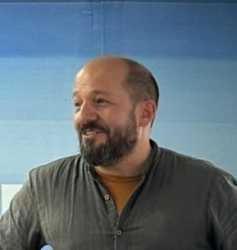
Presenters Toni Morant Profesor Titular, Universitat De València
“Transitional Justice” and Its Discontents: Democratic Consolidation, Memory Regimes, and National Identity in Taiwan
Individual paperMemory Politics and Policies00:00 Midnight - 00:00 Midnight (America/Argentina/Buenos_Aires) 2026/07/31 03:00:00 UTC - 2026/07/31 03:00:00 UTC
Over the past three decades, transitional justice (TJ) has rapidly expanded as a means of addressing challenges in democratic transitions. Despite its widespread adoption, its concepts and practices remain contested and subject to ongoing debate. For instance, does TJ truly help consolidate democracy by confronting the authoritarian past? This paper contributes to critical TJ scholarship by examining Taiwan as an illustrative case. Drawing on historical sociologists such as Jeffrey Olick and Michael Mann, it argues that the prevailing TJ framework is too narrow to address the complex legacies of historical injustice across diverse temporal and regional contexts. In Taiwan, progressive intellectuals and activists uncritically embraced TJ and urged the Democratic Progressive Party (DPP) to implement it after regaining power in 2018, aiming to redress past wrongs committed during the pre-1992 authoritarian era. However, due to deep-seated divisions in national identity and competing memory regimes between the Green (DPP) and Blue (KMT) camps, the implementation of TJ has exacerbated political polarization rather than fostering societal reconciliation. Moreover, the DPP’s approach presumes the existence of a fully sovereign Taiwanese state, despite operating within the constitutional framework of the Republic of China (ROC). This disjuncture has generated new forms of injustice: by interpreting historical grievances through the lens of an unrealized nation-state, TJ not only undermines the DPP’s political legitimacy but also erodes civic solidarity. Most critically, as Taiwan faces growing military threats from the PRC, the current TJ agenda may have weakened, rather than strengthened, the foundations of Taiwan’s young and fragile democracy. The study draws on a mixed-methods approach, combining survey data on public responses to TJ, official government statements, public discourse, and existing scholarly literature. Through both quantitative and qualitative analysis, it seeks to illuminate the unintended consequences of TJ in divided and geopolitically vulnerable societies.
 Toni Morant