Buenos Aires is marked by a dense landscape of memory that reflects the country's struggles with state violence, terrorism, and collective loss. Memorials such as the Memory Park and the ESMA Museum commemorate the victims of the 1976–1983 military dictatorship, while the weekly presence of the Mothers of Plaza de Mayo continues to demand truth and justice for the disappeared. Other sites, including the AMIA memorial and grassroots shrines and street art dedicated to tragedies such as the República Cromañón fire, show how public space in the city has become a powerful medium for mourning, remembrance, and civic engagement. Together, these places and symbols reveal how memory in Buenos Aires is both institutionalized and lived, shaping ongoing debates about justice, responsibility, and the afterlives of violence.

Memory Park - Monument to the Victims of State Terrorism, Buenos Aires.
The Memory Park in Buenos Aires is a memorial to the victims of Argentina's state terrorism from 1976 to 1983. It features a monument with the names of the disappeared and assassinated, a sculpture garden, and an interpretive center with exhibitions and testimonies. Located along the Río de la Plata, the park includes a walkway that leads visitors down to the river where many victims were thrown to their deaths. The Park serves as a memorial and a space for reflection on the atrocities committed during the military dictatorship.
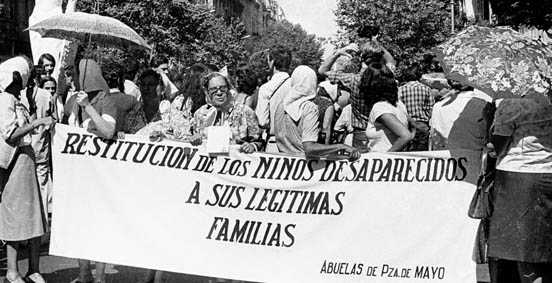
Fourth March of Resistance in Buenos Aires Central Square (1984). The "March of Resistance" are the weekly, silent protests by the Mothers of Plaza de Mayo in Argentina, who march around the May Pyramid in Buenos Aires demanding to know the fate of their children, who disappeared during the 1976-1983 military dictatorship. This enduring protest movement, identified by their white headscarves, began in 1977 and has continued for decades to seek justice, accountability, and the recovery of the victims' remains, becoming a globally recognized human rights symbol.
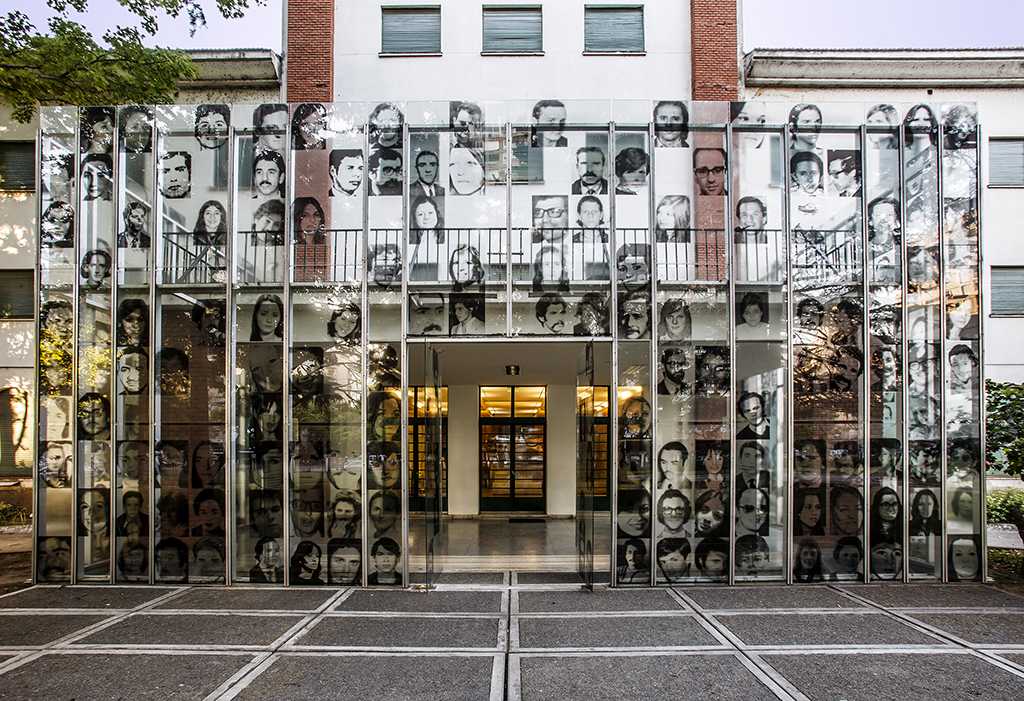
Entrance of the ESMA Museum and Site of Memory – Former Clandestine Centre of Detention, Torture and Extermination
This building is located within the complex of the Former Navy School of Mechanics in Buenos Aires, in the former Officers' Quarters, which was the main secret detention centre during the civil-military dictatorship of 1976-1983. As part of a national strategy to destroy armed and nonviolent opposition to the military regime, the Officers' Quarters building at ESMA was used for holding captive opponents who had been abducted in Buenos Aires and interrogating, torturing and eventually killing them. The entrance of the building, which became a museum in 2015, has a glass surface, a "transparent skin" recalling the faces of the disappeared. The ESMA Museum and Site of Memory in Buenos Aires, Argentina, was officially declared a UNESCO World Heritage site in September 2023.
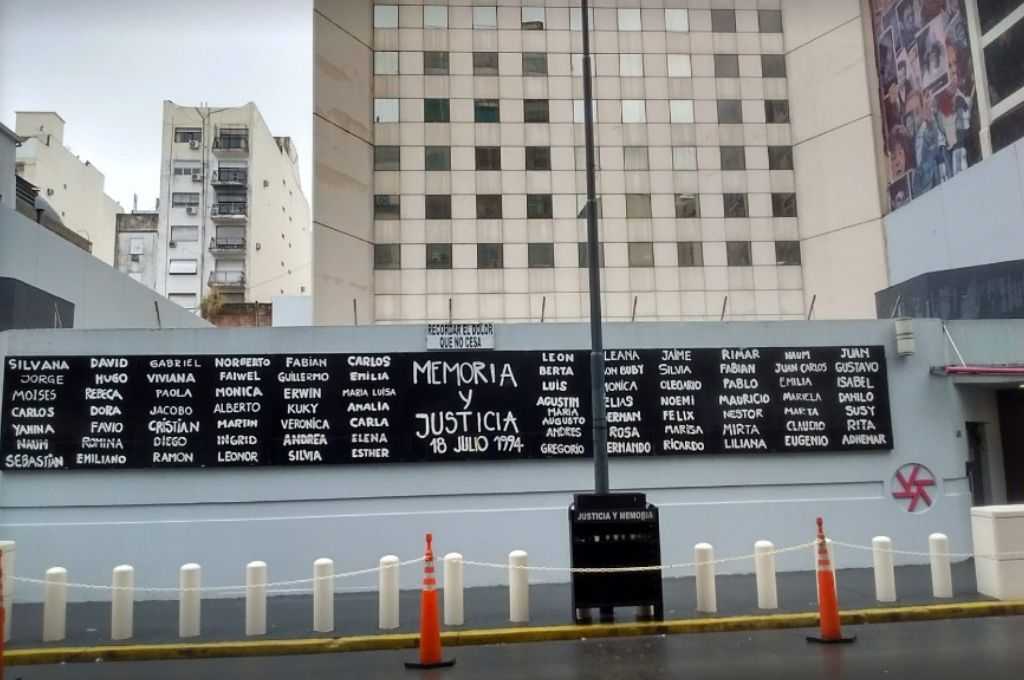
AMIA Building Memorial Plaque (1999) with the names of the 85 victims of the terrorist attack that took place on July 18 in 1994, and was the deadliest in Argentina's history. The plaque is located on the facade of the new building at Pasteur 633, on the same site as the original structure. The original AMIA building was completely destroyed in the attack, a suicide car bombing perpetrated by Hezbollah at the direction of the Iranian regime. A new state-of-the-art building was opened in May 1999 to house the Jewish community center, featuring several memorials to the victims.
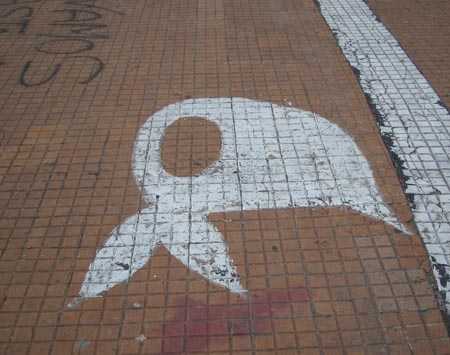
Iconic white handkerchief used by the Mother of Plaza de Mayo imprinted in Buenos Aires central square.
El pañuelo blanco, the white scarf, is a symbol of the Mothers' fight who since 1977 march once a week wearing photos of their children who 'disappeared' between 1976 and 1983. The scarves were originally nappies that were embroidered with the names of their disappeared children or relatives

Street art remembering the nightclub República Cromañon disaster in 2004, when a fire broke out killing 194 people. On 30th December 2004, a fire started when a pyrotechnic flare, a popular device in New Year's Eve celebrations, took over the nightclub República Cromañón in the neighbourhood of Once, Buenos Aires. The fire was set off and ignited foam in the ceiling killing 194 youngsters and injuring 714. Around 3,000 people were attending the gig given by the local rock band Callejeros. Most of the victims died from inhaling poisonous gases, smoke and carbon monoxide. A corner of Plaza Miserere in Once, one block from the site of the former nightclub has become a shrine to the victims of Cromañón. There are murals and graffiti all over the Capital Federal remembering the youths who lost their lives.